Beyond the Glass Case: Five Ways to Turn Exhibits Into Living Worlds
Most people don’t lose interest because topics are boring. They lose interest because topics are presented in old, linear ways: rows of objects, static screens, too many words, not enough world. But today, museums, public spaces and cultural centres are exploring radically different approaches that wake up the senses, engage the body, and make learning feel like discovery again.
Here are five sensory, immersive, and alternative approaches: each illustrated with a real-world example that shows just how transformative new formats can be.
1. Olfactory Storytelling: Letting people amell a world
Smell is the fastest way to drop people into a world. Before we think, we feel — and scent is the most direct sensory doorway into atmosphere, emotion and memory. That makes it a powerful tool for exhibitions that want visitors to step into a topic, not just read about it.
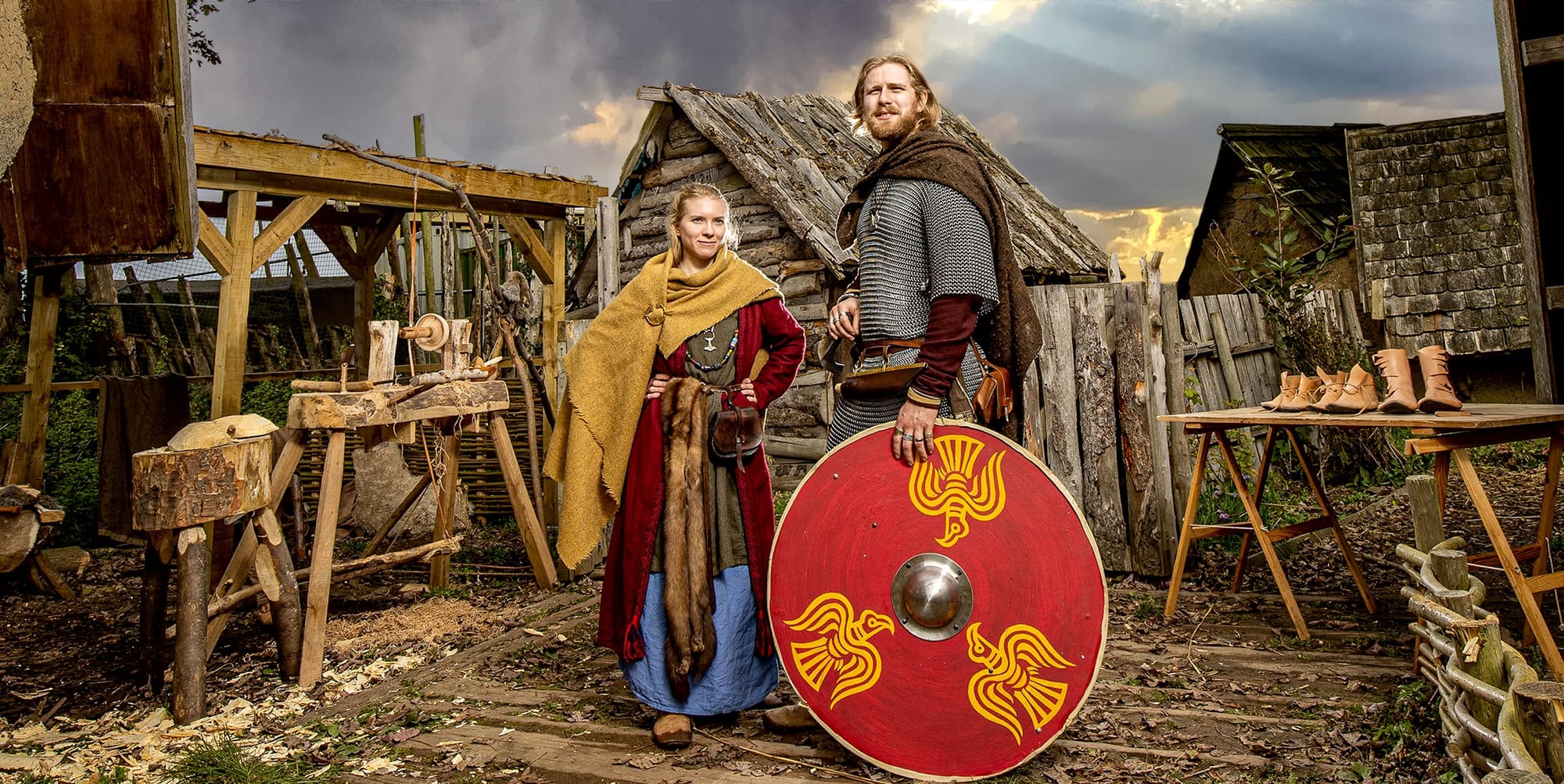
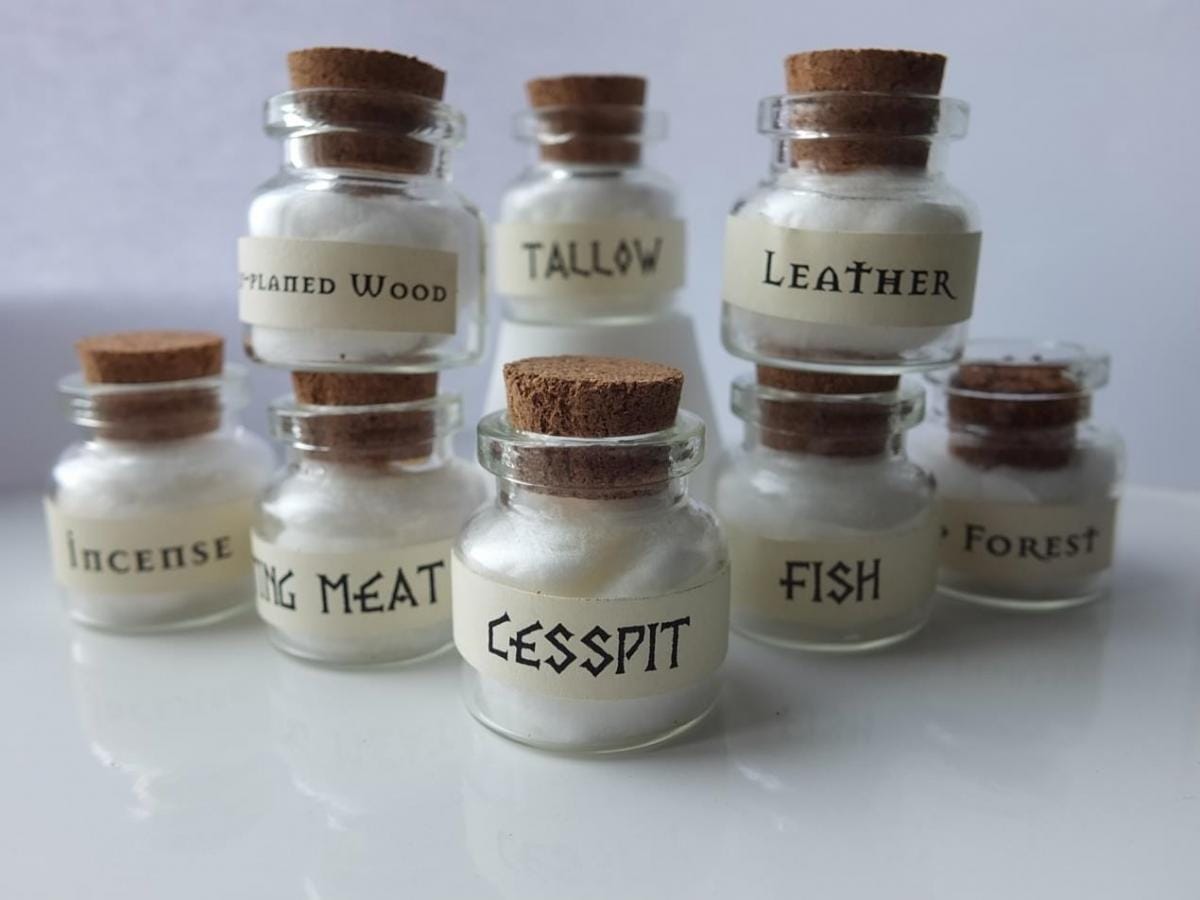
A great example is the The Jorvik Viking Centre in York. Instead of describing Viking life, it lets visitors smell it: smoky hearths, fish markets, leather workshops, damp timber. The scents make the reconstructed street feel lived-in and real. So much so that the museum even sells them in the gift shop.
How it could work anywhere
Imagine beginning an exhibition not with text, but with scent:
- the metallic tang of early industry
- the sweetness of spice markets
- the briny air of a vanished coastline
- the sharp scent of new technologies or materials
Smell creates instant presence and emotional connection.
Why it works
Olfaction bypasses logic and goes straight to the emotional brain. One breath can make a visitor feel “inside” a world before they know anything about it — making complex subjects more approachable and curiosity more natural.
2. Projection Worlds: Turning spaces into living environments
Projection mapping allows exhibitions to transform entire rooms into moving environments. Instead of looking at a topic, visitors are surrounded by it. Scale, motion and atmosphere becoming part of the learning experience.
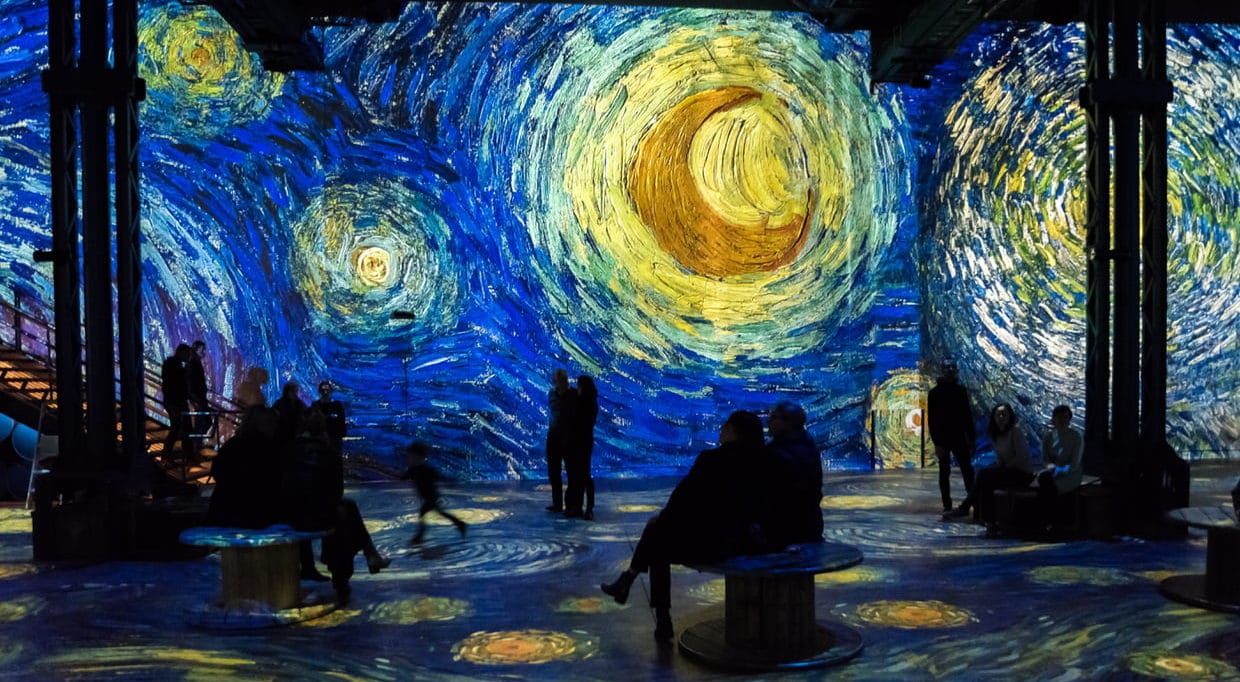
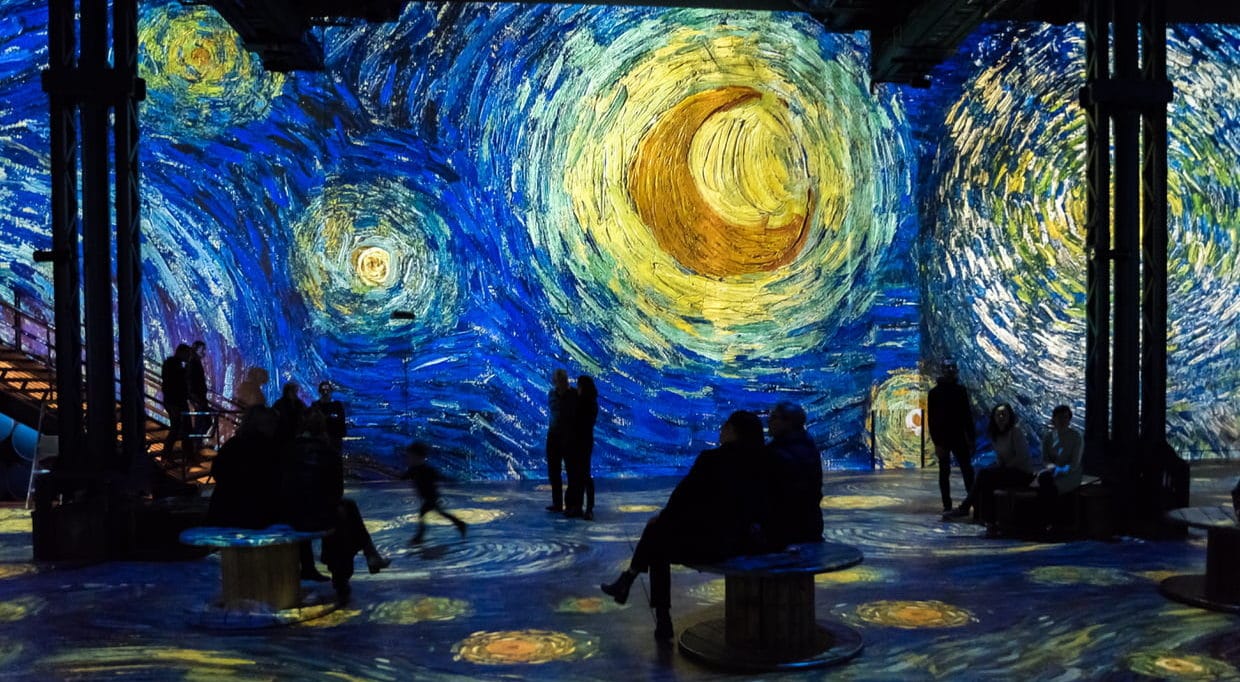
Meet Atelier des Lumières. Here, entire halls become immersive canvases: walls, floors and ceilings dissolve into vast digital landscapes where artworks expand, swirl, break apart and reform around the viewer. Rather than observing art, visitors walk through it. Becoming part of a continuously shifting visual world.
How it could work anywhere
Any subject can become spatial:
- a city growing and shrinking over centuries
- a journey through the human bloodstream
- a rainforest breathing with light
- a poem unfolding across a room
- a glacier melting around your feet
Projection turns information into environment.
Why it works
Immersive visuals trigger awe: a powerful catalyst for curiosity. When visitors stand inside a topic rather than in front of it, complexity becomes intuitive and learning becomes emotional, not just intellectual.
3. Hands-On Making: Learning through the body
Some ideas only make sense when you touch them. Hands-on making turns learning into something physical: you experiment, adjust, fail, try again. And in the process, concepts become intuitive rather than abstract.
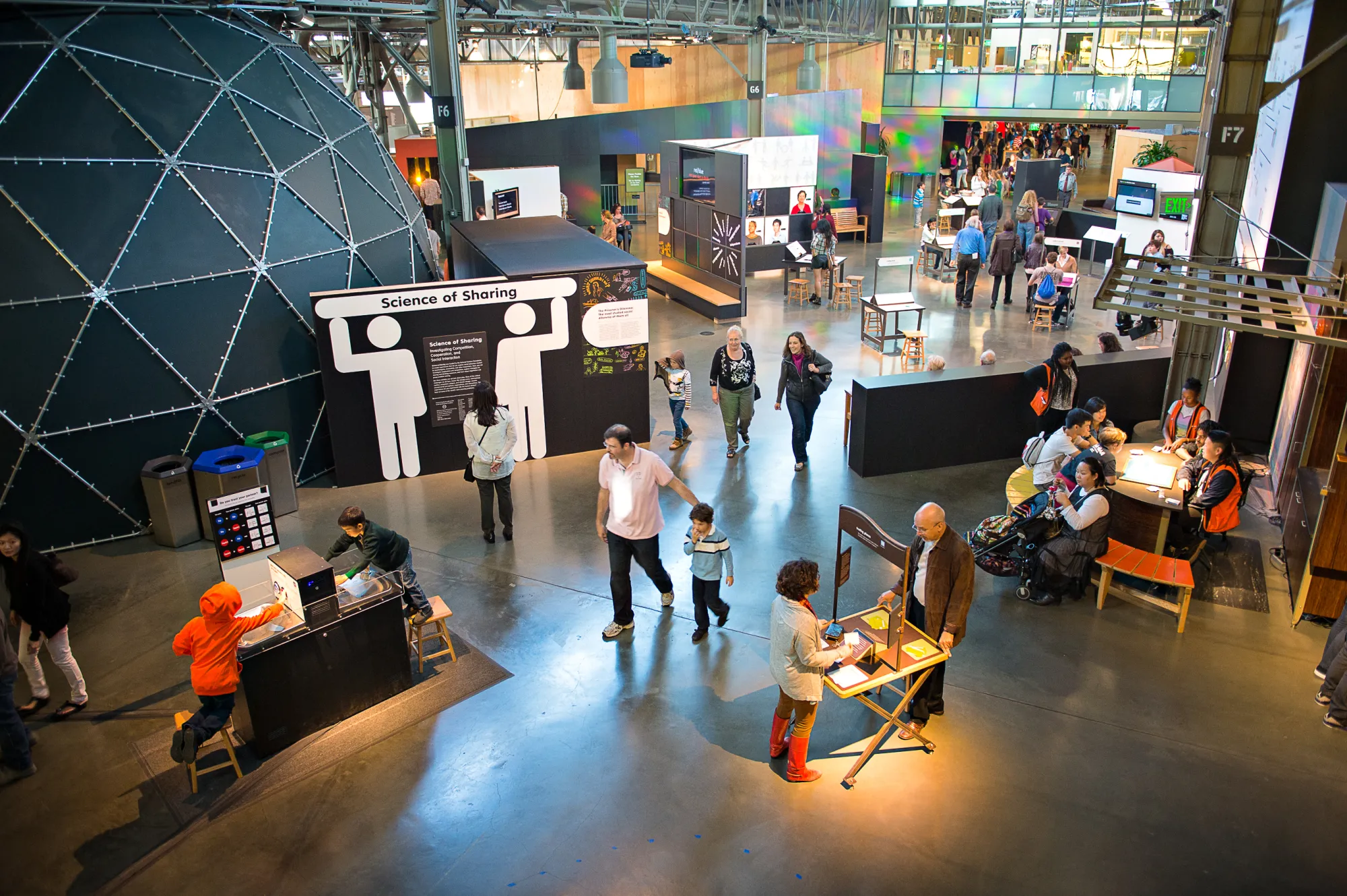
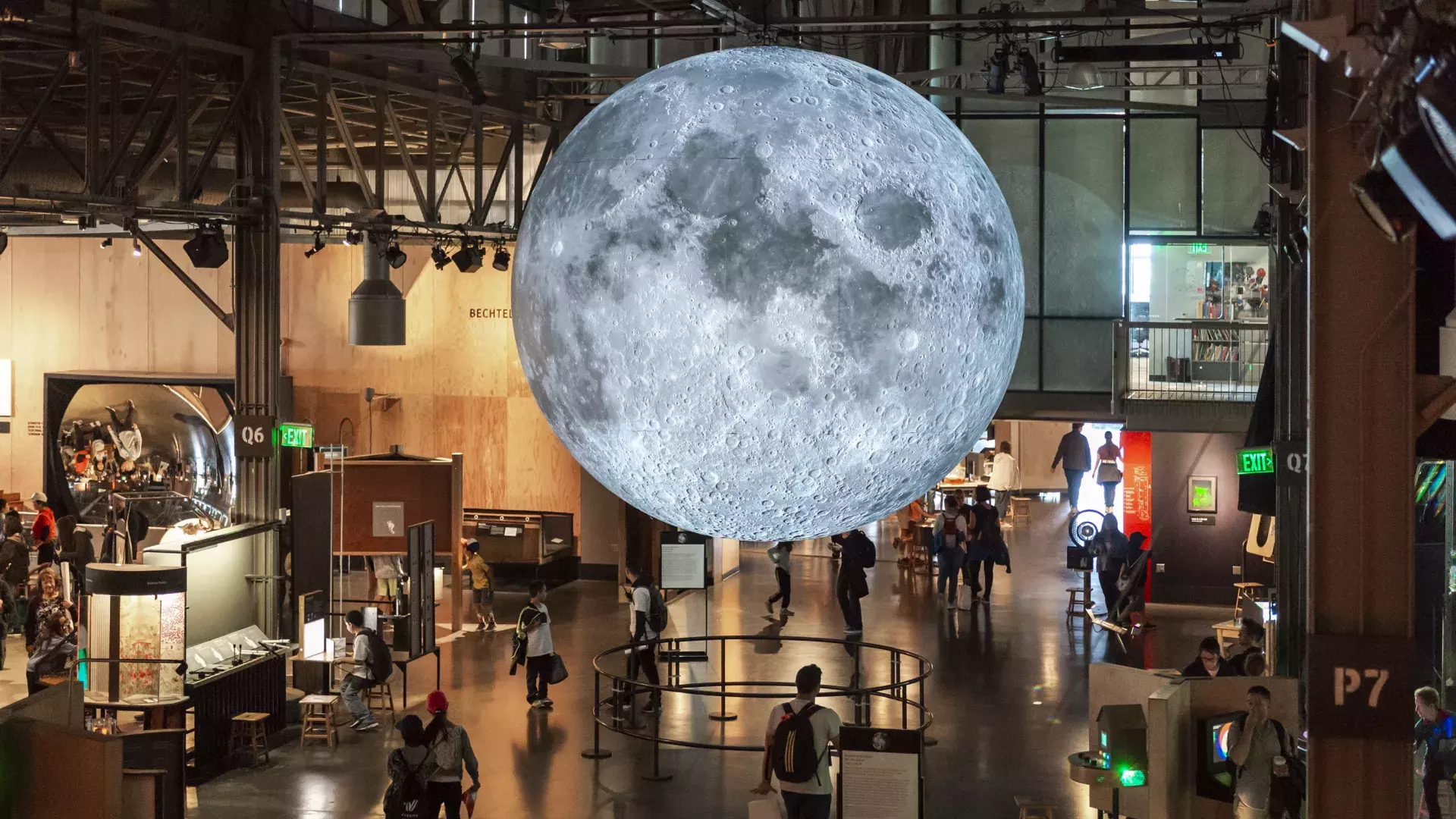
The Exploratorium
A powerful example is The Exploratorium in San Francisco. Here, visitors don’t stand back and observe; they build, tinker and test. They bend light, create sound waves, balance forces, experiment with materials, and assemble simple machines. The museum treats curiosity as a physical act, not a passive one.
How it could work anywhere
Any subject can be explored through making:
- weaving on a simple loom to feel the rhythms of textile heritage
- grinding pigments to recreate medieval or Renaissance colour palettes
- building water channels to explore climate and flow
- constructing arches or bridges to feel structural logic
- prototyping ideas in design, tech or sustainabilitymaking bread
Doing replaces explaining.
Why it works
Hands-on activities create embodied knowledge. The kind you remember because you felt it. When visitors use their bodies to explore a topic, understanding becomes personal, memorable and often joyful.
4. Soundscapes & Sonic Worlds: Hearing the invisible
Sound has a unique ability to build atmosphere without showing anything at all. A single sonic shift can transport visitors into a different environment, reveal invisible dynamics, or make them feel part of a world that no longer exists. Soundscapes turn listening into a form of discovery.
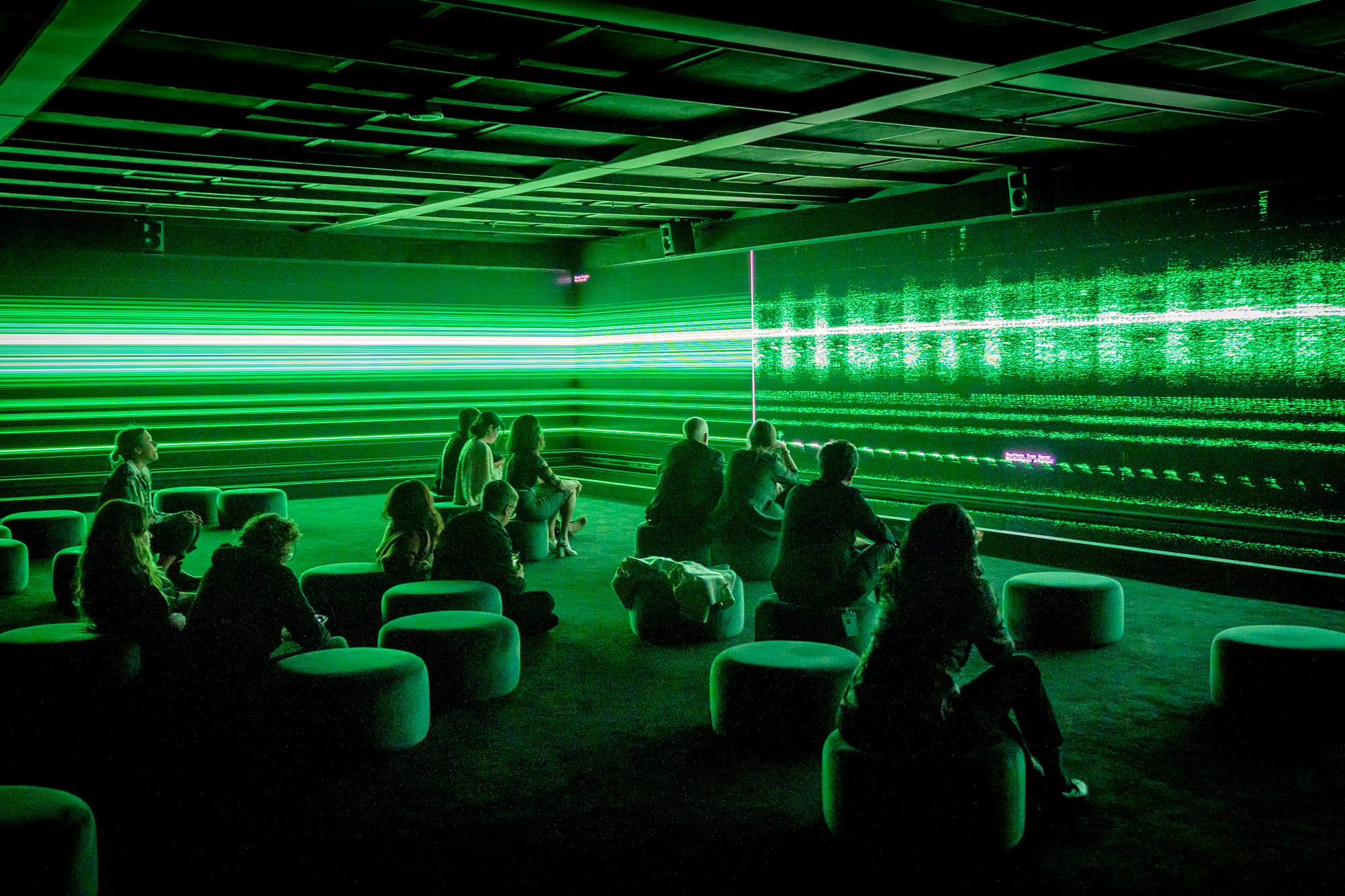
A powerful example is The Great Animal Orchestra by Bernie Krause, shown at Fondation Cartier and major museums worldwide. The installation immerses visitors in the soundscapes of disappearing ecosystems: rainforests at dawn, wetlands alive with insects, oceans full of whale song. The visuals are abstract, but the sound is remarkably real. As the biodiversity thins, the audio becomes emptier, giving visitors a physical sense of loss without a single statistic.
How it could work anywhere
Sound can bring any topic, past or present, to life:
- the layered noise of a medieval marketplace: blacksmiths, traders, animals, chatter
- the echoing rhythm of an ancient amphitheatre or temple ceremony
- the creaking hull and waves of a long-distance trading ship
- the industrial clatter of a 19th-century factory contrasted with today’s hum of automation
With sound, the imagination completes the picture.
Why it works
Sound activates emotional and spatial awareness. It fills the mind with imagery without dictating specifics, allowing each visitor to construct their own understanding. It’s immersive but gentle, atmospheric but informative. A perfect tool for creating presence and curiosity without overwhelming the senses.
5. Digital Layers: Revealing what was once there
Many places hold stories that visitors can’t see: lost buildings, vanished landscapes, buried structures, forgotten rituals. Digital layers (whether delivered through AR, VR, mixed reality or spatial projection) allow exhibitions to make these hidden worlds visible again, right where they belong. They bridge the gap between what remains and what once was.
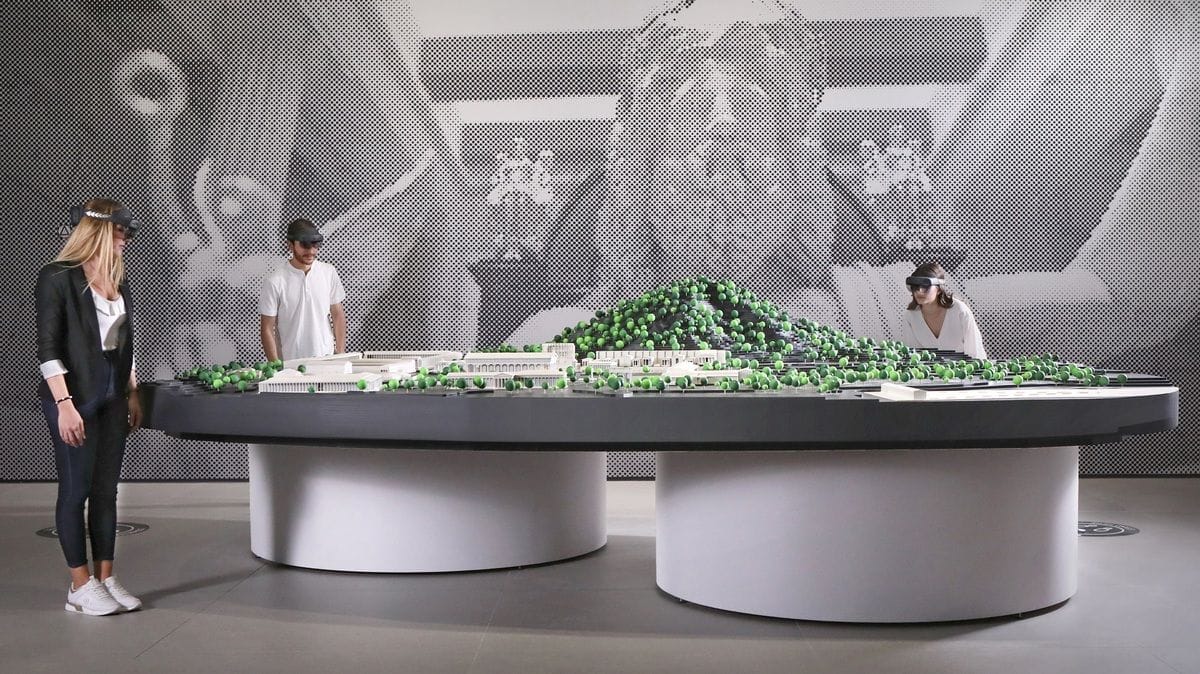
Take for example the Ancient Olympia: Common Grounds project in Greece (by Microsoft). At the archaeological site, visitors can use a mobile device or headset to see Olympia as it once looked: temples rising, statues restored, athletes training, colours returning to stone. What appears now as scattered ruins becomes a living sanctuary again. It’s not a fantasy reconstruction: it’s evidence-based interpretation layered directly onto the real landscape.
In one moment, visitors see the present; in the next, they see the past revealed on top of it. The site becomes legible.
How it could work anywhere
Digital layers can illuminate any context:
- showing the original facade of a historical building as you stand before its ruins
- reconstructing how a mill works on the inside, while standing next to that mill
- visualising how a river or coastline changed shape over centuries
- revealing underground archaeological remains beneath today’s streets
- animating climate, trade or migration patterns directly on a city map
- letting monuments, trees or industrial relics “speak” when scanned
The world becomes an open-air exhibition.
Why it works
Digital layers make learning contextual and spatial. Instead of imagining what used to stand here, visitors see it. Instead of reading about change, they feel its scale. It brings relevance and immediacy to any topic: history, ecology, urban development, science. And because the story unfolds on the actual site, memory anchors more deeply. Discovery becomes personal.
Building worlds people want to enter
What all these examples show (from scent tunnels to projection rooms, hands-on workshops, sonic environments and digital layers) is that learning becomes powerful when it becomes experiential. People don’t fall in love with a topic because they’re told it’s important; they fall in love when it comes alive around them, when it engages their senses, their imagination, their emotions and their curiosity.
The real opportunity for museums, cultural centres and public spaces isn’t technology for its own sake. It’s the chance to create worlds that people want to enter. Environments that spark wonder, invite participation and make even complex subjects feel accessible.
And when we do that, something shifts: people who thought they weren’t interested suddenly lean in. They connect, they care, they remember. Curiosity returns. And that, ultimately, is the foundation for deeper understanding. And for falling in love with the world again.