TWIL #56: From Crooked Fields to Napoleonic Veterans
Every Sunday I write down a few things that caught my attention that week. A landscape detail. A fragment of history. Something that made me pause.
It is my way of sorting my thoughts. Of making sense of what I notice. Of storing it somewhere outside my own head.
Not to be complete.
Just to look a little closer.
The crooked fields of England
It is easy to miss.
A field you pass on the way to work.
A hedge that bends for no obvious reason.
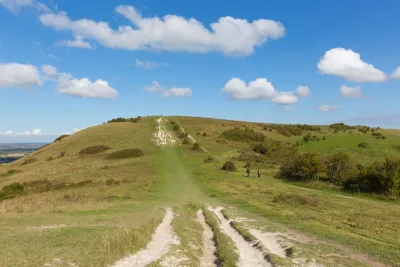
Grass that rises and falls almost imperceptibly in the evening light.
Nothing dramatic.
Just countryside.
And yet that ordinary ground can hold centuries of decisions.
A shared system
In medieval England, many villages farmed through the open-field system. Instead of compact private farms, they worked vast shared fields divided into long, narrow strips. Each household held scattered strips across different soils.
It sounds inefficient to us.
It was careful.
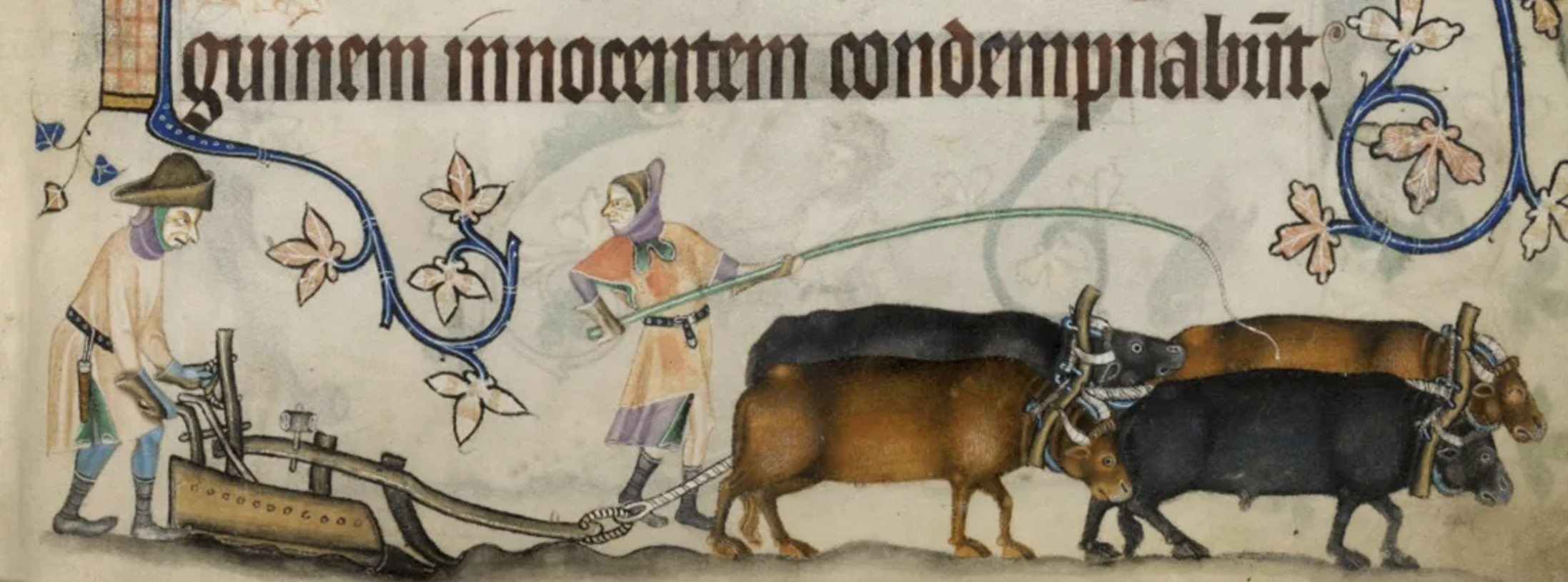
Risk was distributed. Good land and poor land were shared. Ploughing had to be coordinated because heavy mouldboard ploughs worked best in long uninterrupted runs. Crop rotation and fallow years were collective choices.
The landscape was a social agreement made visible.
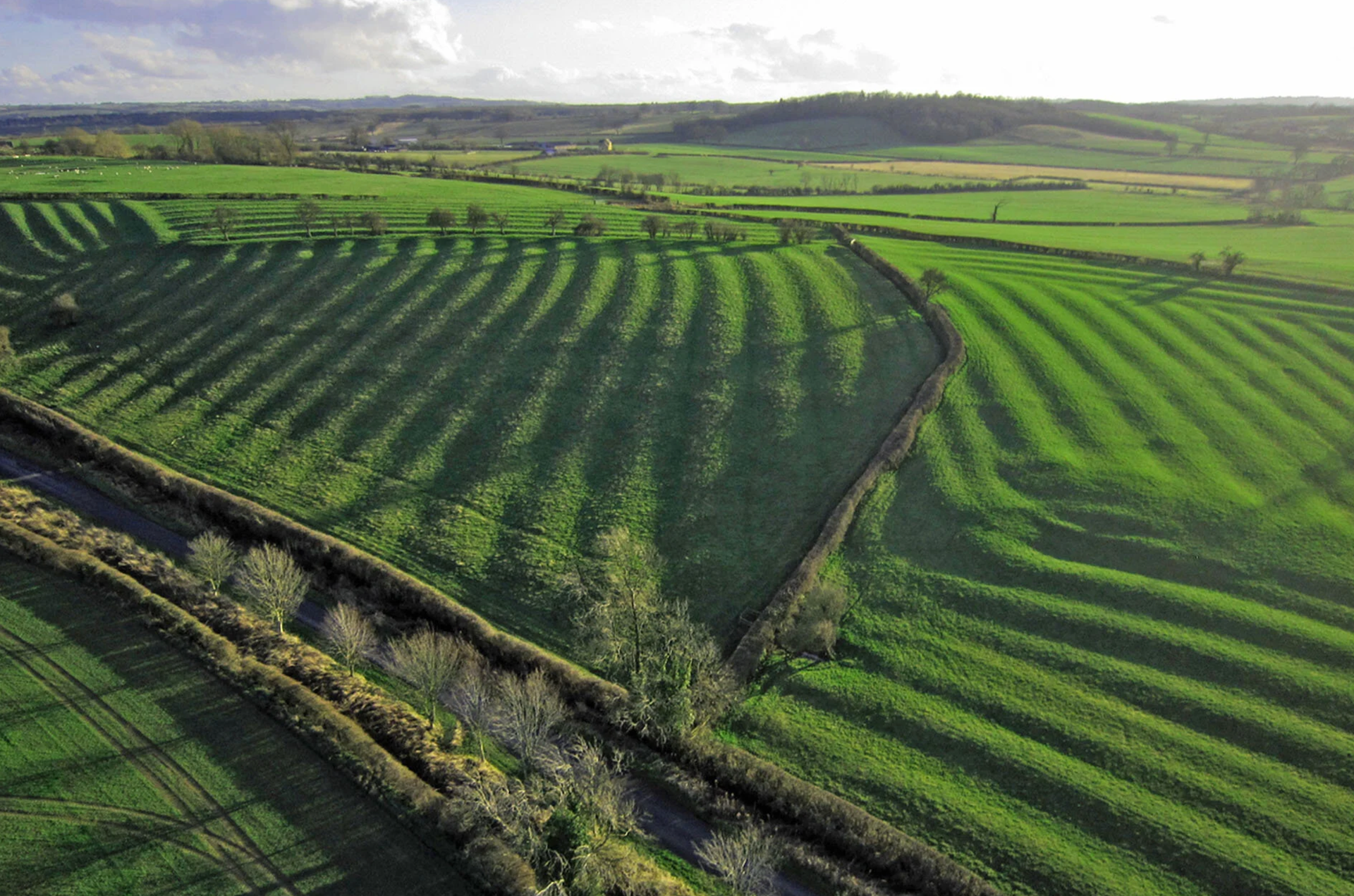
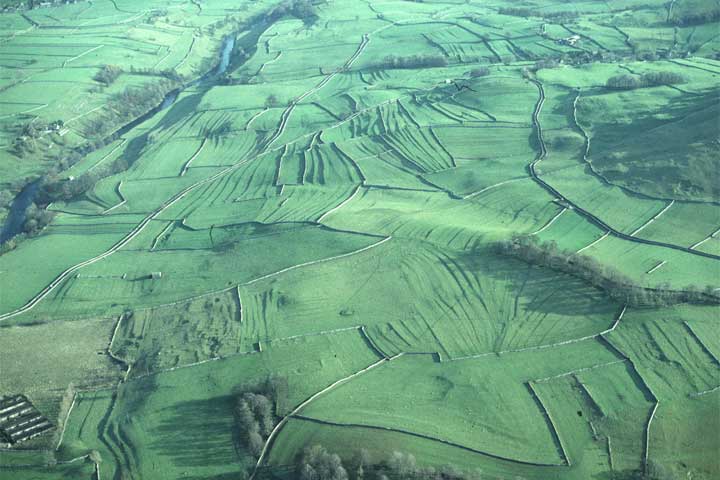
If you look at places like Lower Wharfedale from above, you can still detect that logic. The irregular shapes are not accidents. They are the geometry of cooperation.
Movement turned into pattern
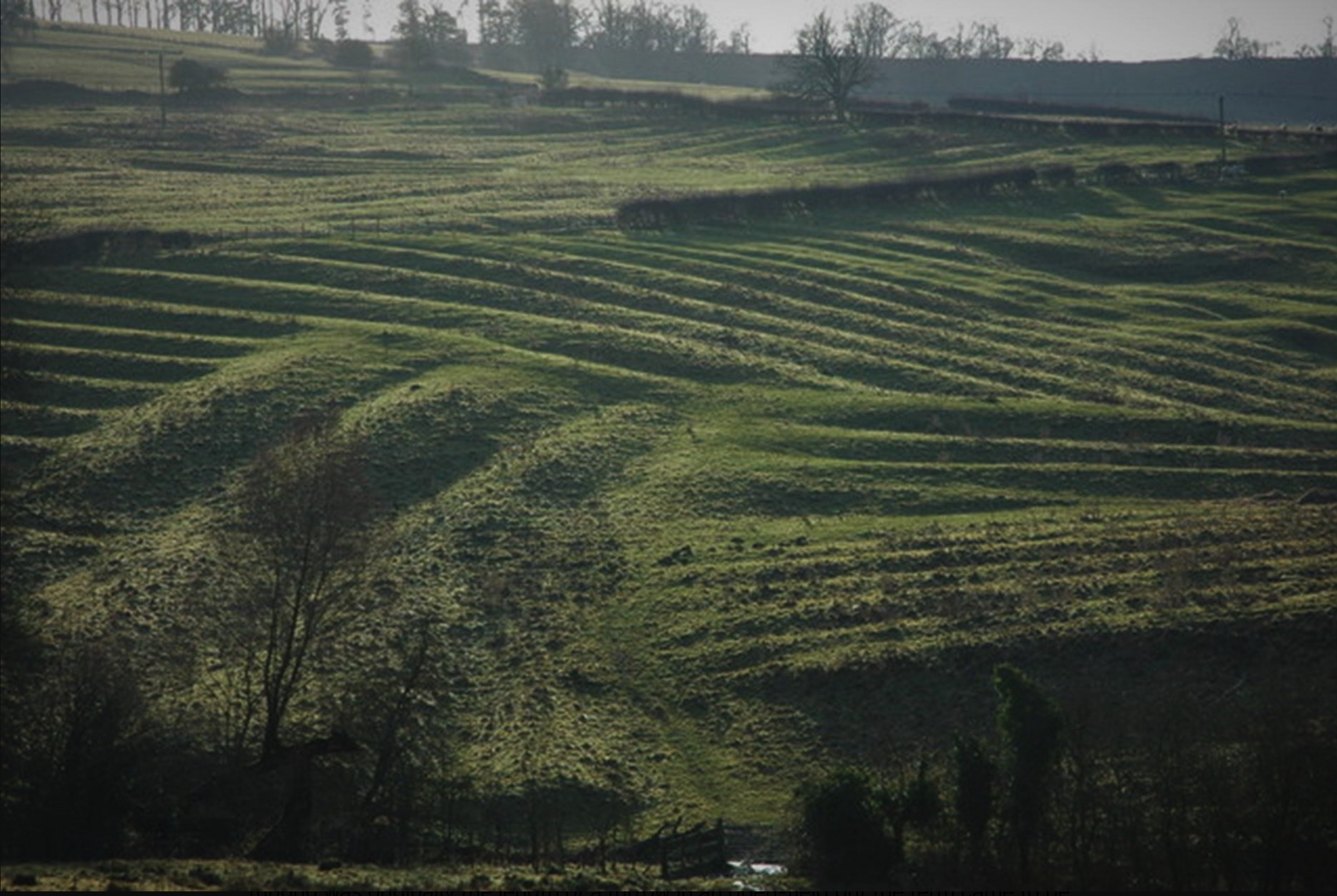
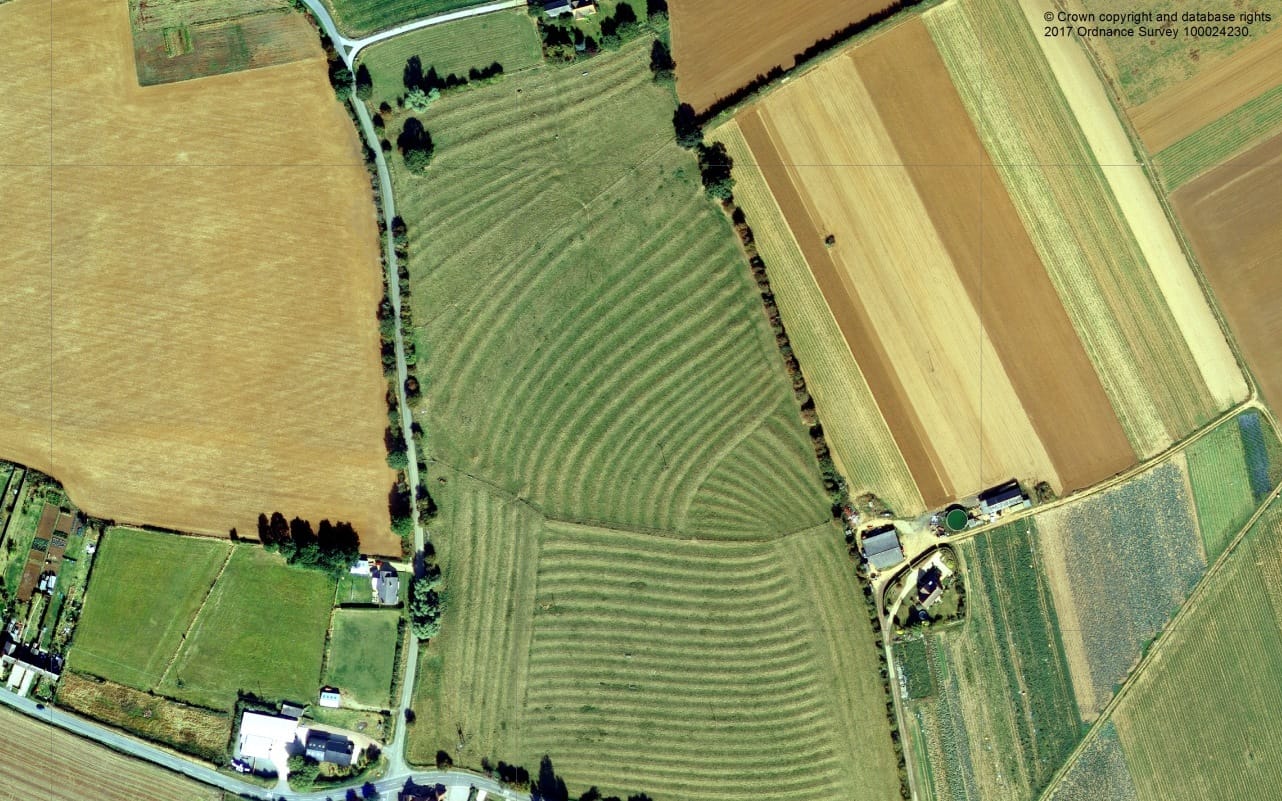
The soft ripples known as ridge and furrow were created by teams of oxen pulling ploughs up and down those strips. At the end of each run, the animals had to turn wide. That turning arc was repeated for generations.
Slowly, the soil rose into ridges. The strips developed a subtle reversed S. What began as a practical movement became a permanent feature of the land.
You can still walk across it. You are crossing medieval muscle memory.
Straight lines and new priorities
From the late medieval period onward, and especially during the 18th and early 19th centuries, enclosure transformed the countryside. Scattered strips were consolidated into compact holdings. Surveyors measured. Hedges marked private ownership.
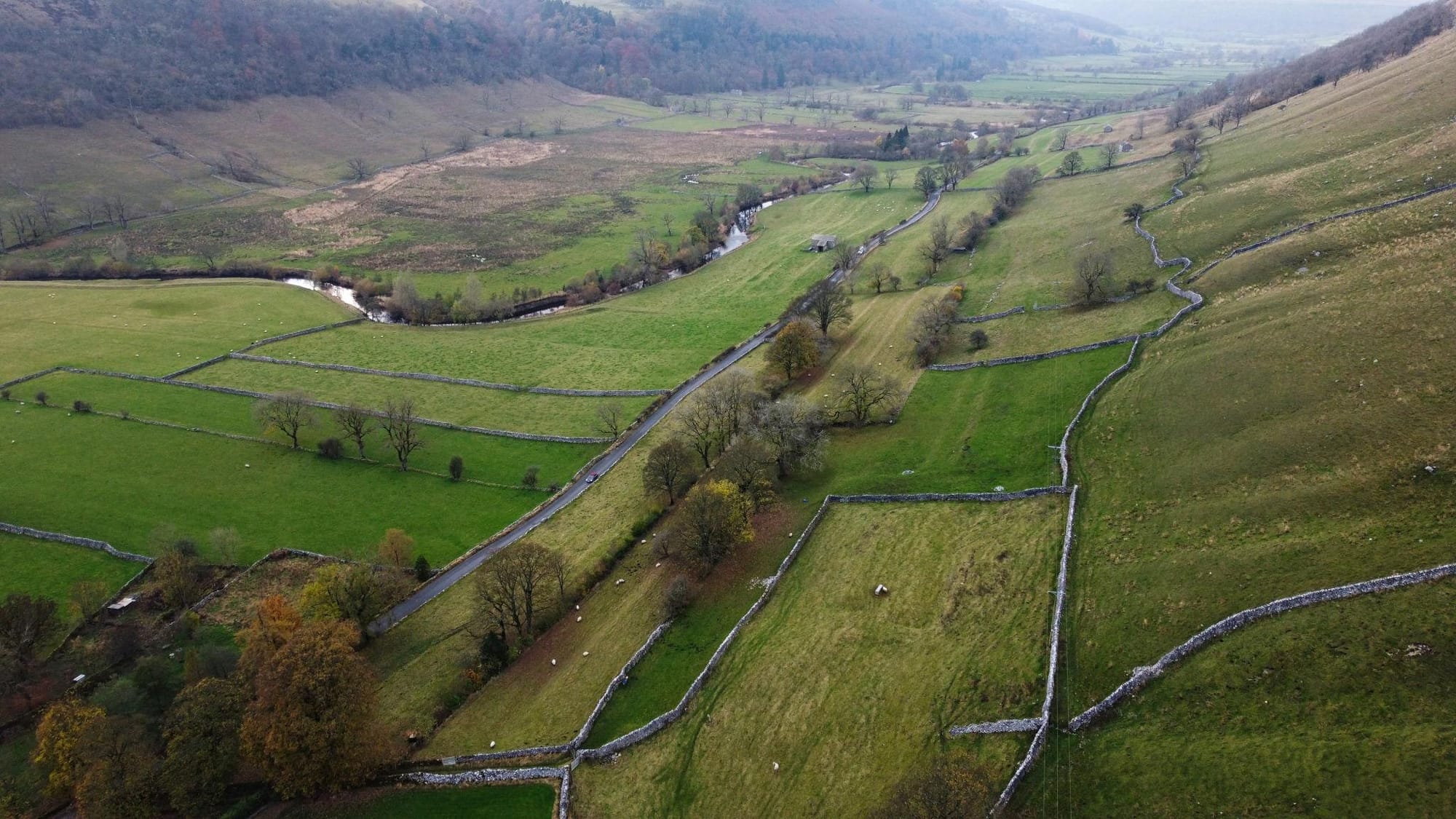
Fields became straighter.
The shift was not only visual. It reflected deeper change:
- from communal farming to individual control
- from shared obligation to market production
- from custom to legal boundary
But enclosure rarely erased everything. It absorbed earlier patterns. Medieval curves still ripple inside later fields. Old footpaths often follow ancient strip edges.
The countryside was not replaced. It accumulated.
That is what makes it quietly astonishing. Land you can walk past every day is not empty backdrop. It is an archive of labour, cooperation, conflict and reform.
The bends in a hedge are not casual.
They are time, still visible.
Rock as memory
Yesterday I came across this video of the Tsodilo Hills in Botswana. These hills are sometimes called the Louvre of the desert, because they hold more than 4,500 rock paintings! Oryx in ochre. Humanlike figures with antlers. Images layered over tens of thousands of years.
What changed my view was a single line in the film:
“The breakthrough about people being able to put designs onto an object like that is that it allows you, for the first time, to store information outside of the human brain.”
That is the quiet revolution you are looking at.
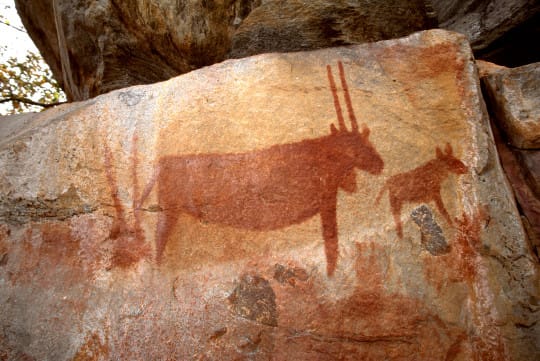
These hills are not just decorated stone. They are an early archive. A shift from memory carried in bodies to memory held in landscape.
The documentary approaches Tsodilo not only as archaeology, but as a living spiritual place for the San people today. It suggests that culture does not only survive in stories.
Sometimes it is written into the earth itself.
Looking into their eyes
I have read so much about the Napoleonic era. Campaign maps, memoirs, the Sharpe novels of Bernard Cornwell. Paintings of charging cavalry, heroic last stands, snow and smoke.
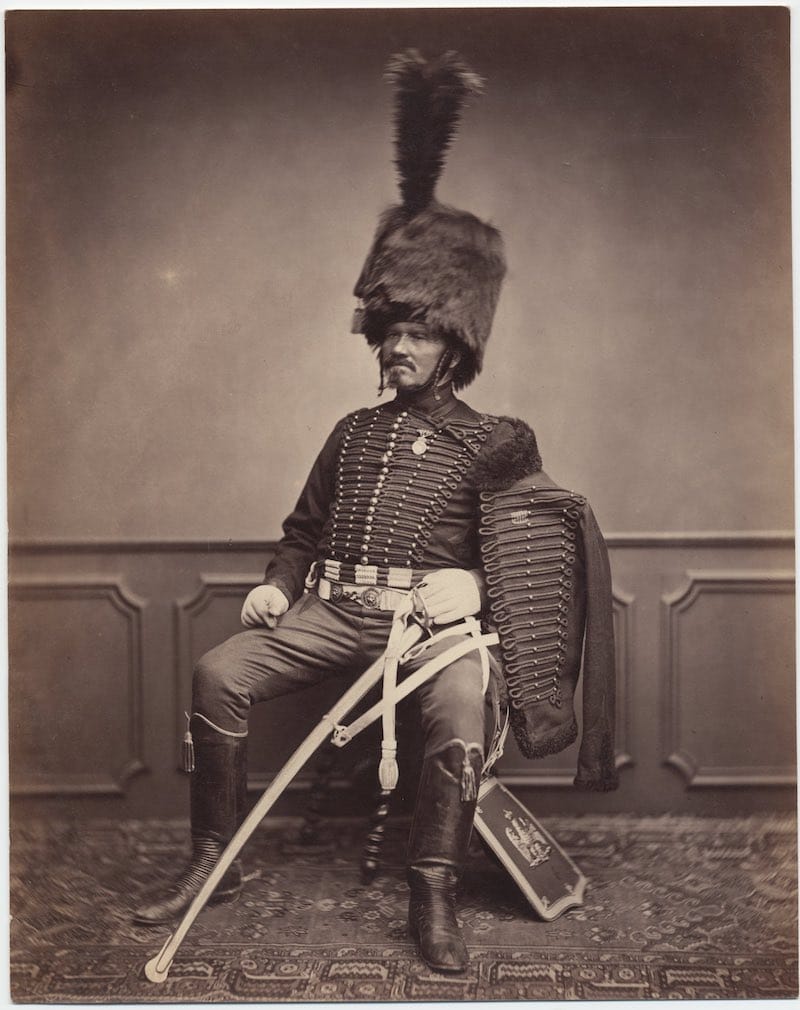
And then I came across these photographs in the Anne S.K. Brown Military Collection at Brown University Library.
Fifteen sepia portraits. Veterans of the Grande Armée. Photographed in the 1850s when they were already in their seventies and eighties. Large studio prints, carefully mounted. Their names and regiments penciled on the back years later.
Three of them stayed with me.
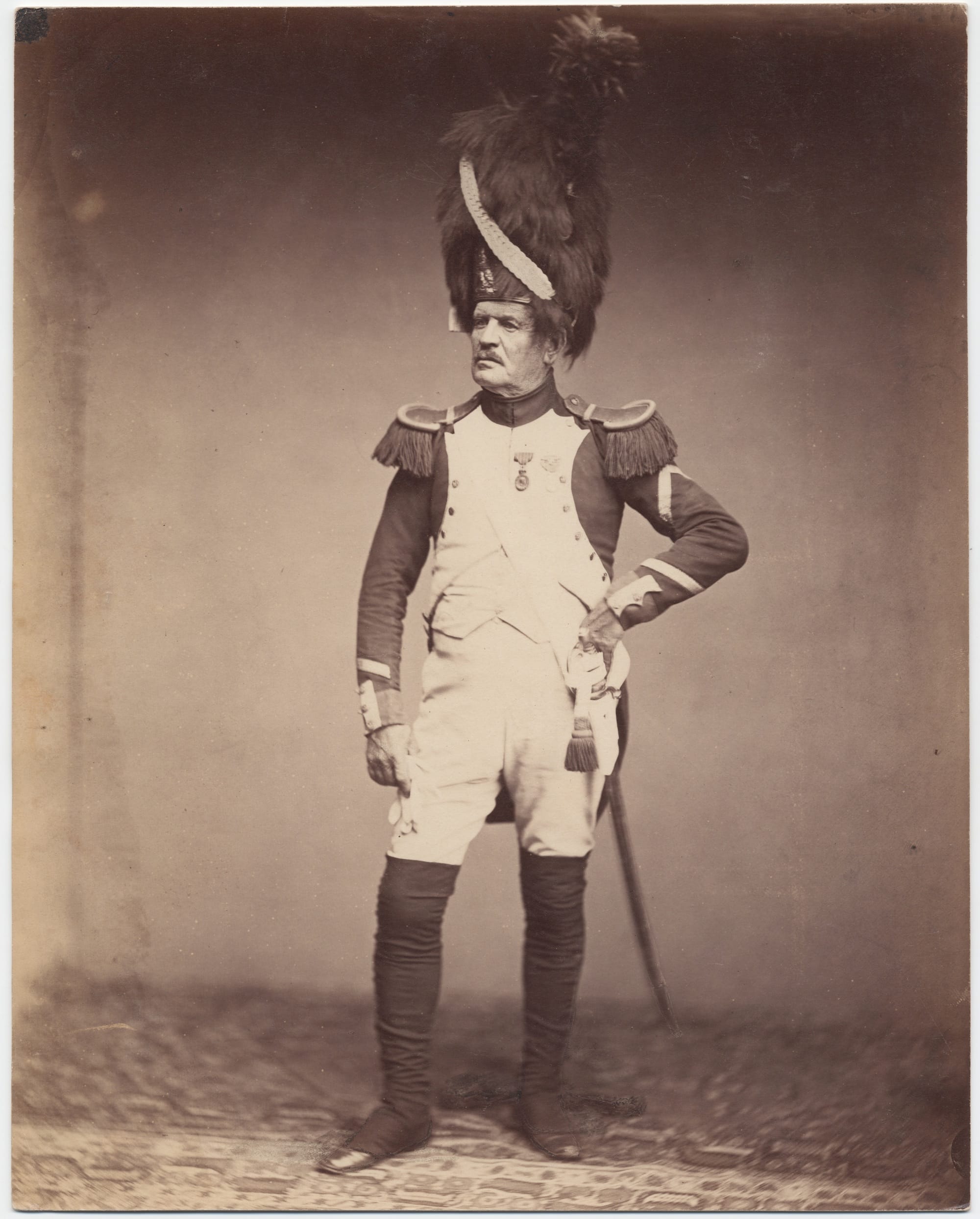
Sergeant Taria stands tall in the bearskin of the Grenadiers of the Guard, Napoleon’s most elite, feared, and loyal heavy infantry. This unit was created to protect the Emperor and deliver, or withstand, the decisive blow in battle. Grenadiers of the Guardwere chosen for their experience, height, and courage. You can almost sense the discipline that once carried him across Europe.
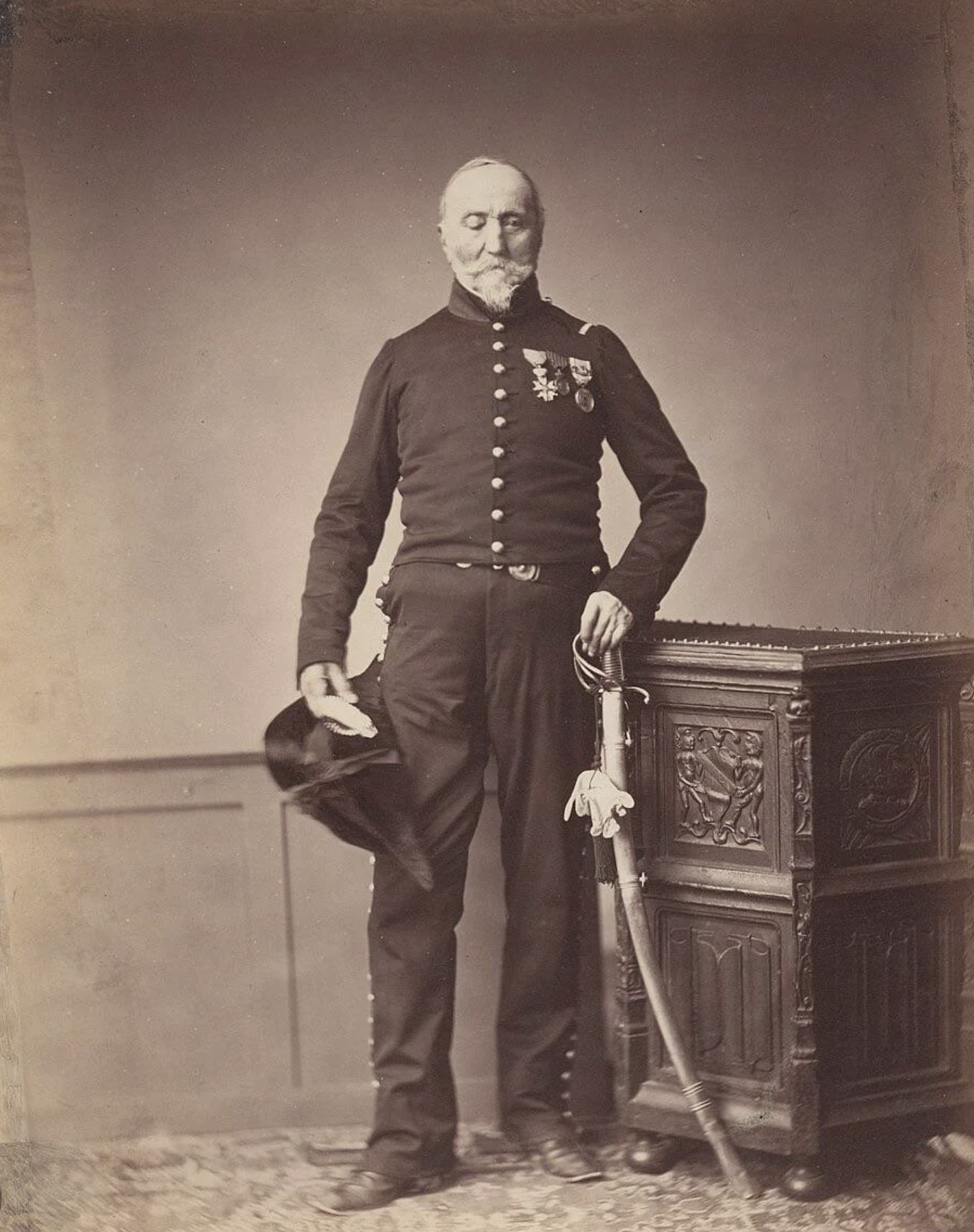
Monsieur Loria of the 24th Mounted Chasseurs has lost his right eye. He stands beside a piece of studio furniture, steadying himself. On his chest hangs the Legion of Honor and the Saint Helena Medal, issued in 1857 to surviving veterans. Decorations for wars fought more than forty years earlier.
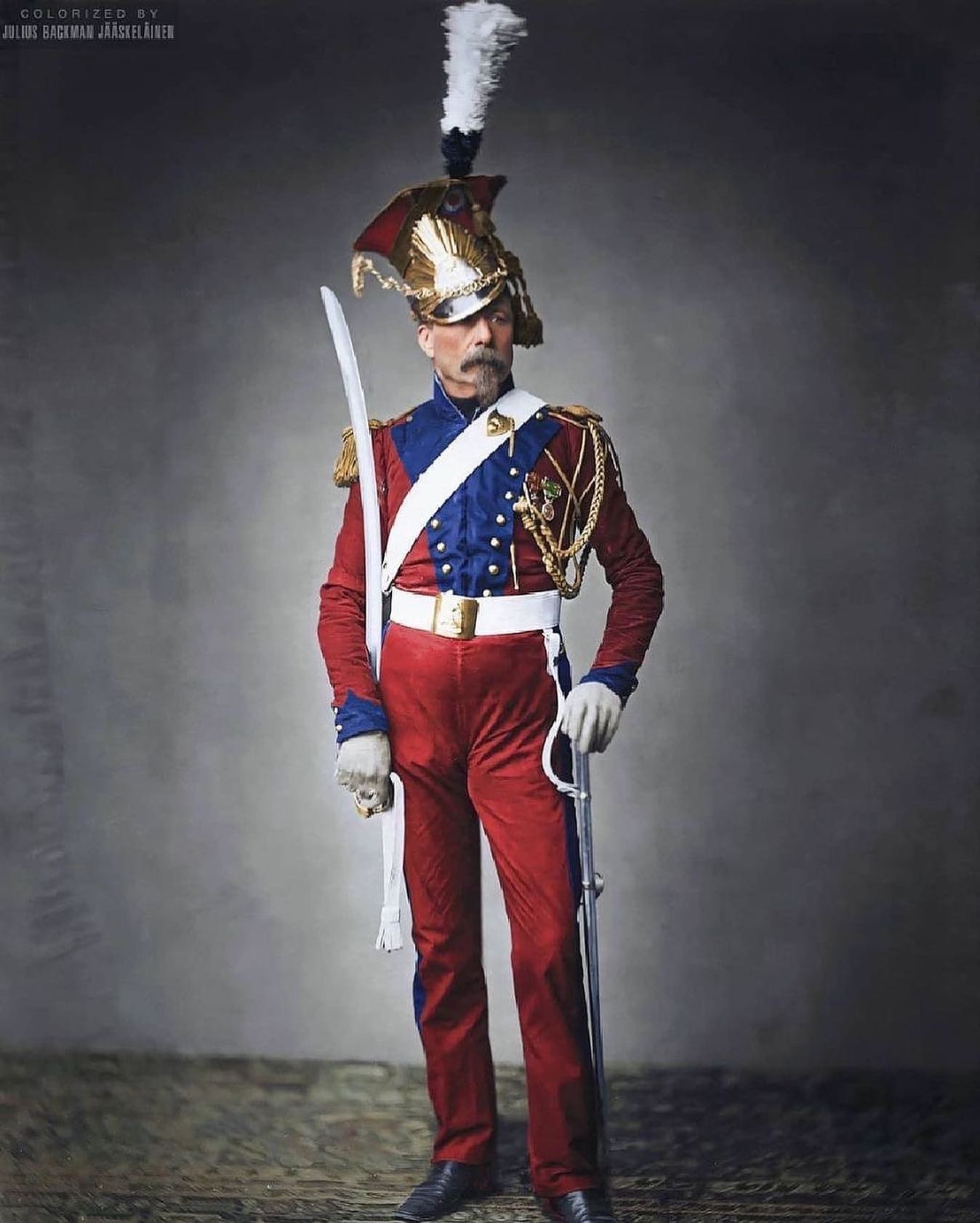
And then Verlinde of the 2nd Lancers, 1815. Wearing a shapka. The name caught my attention. It might be Dutch. If so, he would have been one of those men from the Low Countries drawn into Napoleon’s wars. I found a colorized version of his portrait. Suddenly the uniform came alive. Deep blues, sharp reds, polished metal. The beauty of Napoleonic dress was not just vanity. Officers needed to see at a glance which troops were where on a chaotic battlefield. Color was information. Structure. Order in the smoke.
Why were they photographed?
Most likely around May 5, the anniversary of Napoleon’s death, when veterans gathered in Paris to honor him. By then they were relics of another age. The Empire had fallen. France had changed. They remained.
Paintings turn them into legend, but a photograph does something else. It fixes a face. The set of the mouth. The tiredness in the eyes. The distance.
When I look at them, I stop seeing “the Russian campaign” or “Waterloo.”
I see a man who survived.
And carried it with him for decades.